


Website:https://jpn.nec.com/

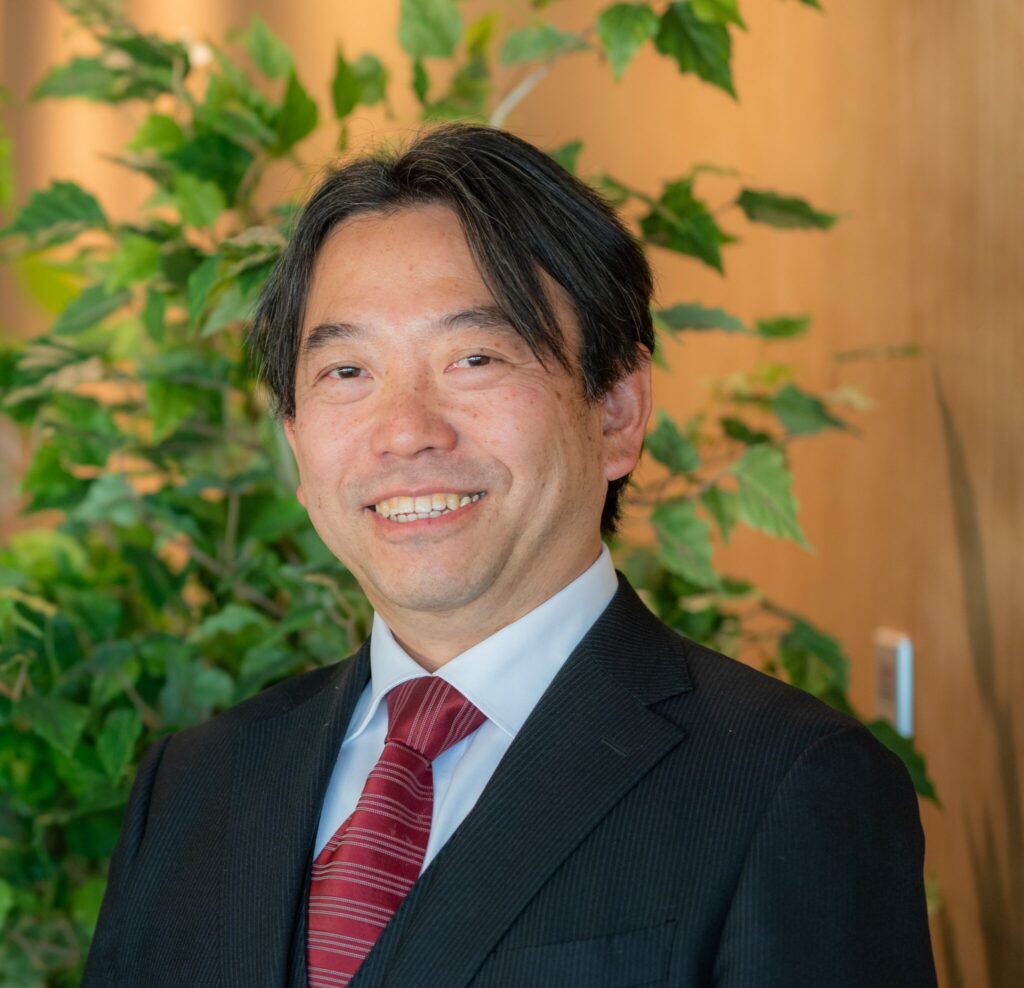
Thank you for your cooperation in the interview.
NEC Corporation (NEC)
Healthcare and Life Sciences Business Division
Chief Professional
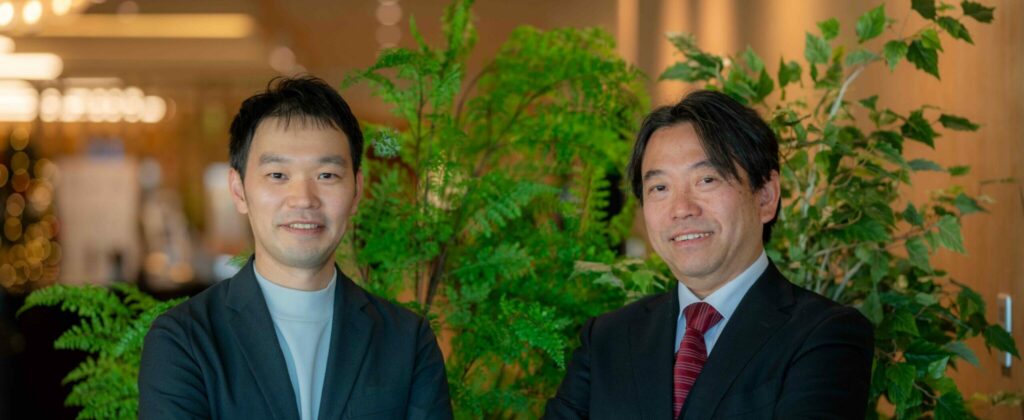
Mr. Makoto Fukui
※The organization names listed are information current as of the time of the interview (December 2024).
Introduction
BIRD INITIATIVE supported the "NEC Healthcare Generative AI Co-Creation Program," which explores new approaches to regional medical care. In this case study, we spoke with Makoto Fukui of NEC about the background to the program, the details of the initiatives, and future prospects.
01Background
Q: First, please tell us about your career so far. (BIRD Shimada)
NEC Fukui:I joined NEC in 1993 and worked in the sales department, where I was responsible for local governments, government agencies, medical institutions, and private companies. While working in a wide range of IT industries, I became interested in healthcare, and later shifted to medical sales, and have been involved in the healthcare and medical field for around 30 years.
Until about five years ago, my main focus was on hospital information systems - electronic medical records, but in light of Japan's aging population and changes in demographic structure, I began to think, "To achieve sustainable community medical care, I want to find solutions that look beyond the hospital and focus on the entire community." Since then, I've been in charge of new business development since around 2018, and for the past five to six years I've been focusing on new initiatives.
Q: What role do you currently play in your department? (BIRD Shimada)
NEC Fukui:I work in the Healthcare and Life Sciences Business Division, which is part of the Global Innovation Business Unit (GIBU). As a strategic advisor in the healthcare field, my mission is to think about how to expand existing businesses and create new businesses, while also exploring how to create synergies between the two.
For existing businesses, markets and customers are already established, so steady sales and profit growth is important. On the other hand, for new businesses, the customer profile and value proposition are still unclear, so we are promoting investment and research and development while exploring how we can combine NEC's technology and customer base to create a viable business.
02Background of the Healthcare Generative AI Co-Creation Program
Q: Could you tell us how the "Healthcare Generative AI Co-Creation Program" came about? (BIRD: Shimada)
NEC Fukui:With the practical application of ChatGPT at the beginning of last year (2024), we felt that the time had come for generative AI to be fully utilized. With large-scale investments underway globally, data shows that the healthcare sector accounts for approximately 19% of the total, revealing enormous potential. However, healthcare is a regulated industry, and functions that provide diagnostic and treatment suggestions from the outset pose significant legal hurdles. Therefore, we began by incorporating generative AI into NEC's existing electronic medical record (EMR) business, enhancing its added value. In fiscal year 2023, we released Japan's first implementation of generative AI in EMR, launching an in-hospital service that supports physician work styles and operational efficiency. From there, we broadened our perspective and began considering how to improve the sustainability of regional healthcare as a whole, rather than just improving the efficiency of individual hospitals. Regional healthcare challenges, such as an aging population and labor shortages, are diverse. Therefore, in fiscal year 2024, we launched the "Healthcare Generative AI Co-Creation Program" to explore solutions from a broader perspective.
03Spreading to the entire community medical system
Q: Now that you've started to see results from linking with electronic medical records, you've turned your attention to community healthcare. Around 30 people participated in this program, not just from NEC but also from medical institutions and healthcare IT vendors. Could you tell us why? (BIRD Shimada)
NEC Fukui:There are two main reasons for this. The first is that the challenges facing regional medical care are completely different from region to region. For example, the situation in terms of hospital size, patient numbers, and number of doctors is completely different between Tokyo and the countryside, and even within Hokkaido, the needs and challenges of Sapporo and Nemuro are very different. For this reason, rather than coming up with solutions on our own at NEC, we needed to think about them together with people involved in medical care in each region.
Second, our business is supported by the cooperation of local partner companies. From existing ICT services to new generative AI technology, the voices of partner companies are extremely important for us to grow together. That's why we invited both medical institutions and partner companies to the program, combining on-site knowledge with the potential of technology.
04The potential of "co-creation" revealed through the workshop
Q: In the workshop, we first learned graphic recording (grareco) and then drew up an ideal service concept for community medical care. How did it go when you actually tried it? (BIRD Shimada)
NEC Fukui:First of all, I realized that it is important not only to discuss issues verbally, but also to write them down and visualize them. Furthermore, when visualized with Grareco, I felt that the way it was communicated to the other person was completely different. It made it easier to advance the discussion and share information than with text alone. This was my second experience, and once again I realized how effective it is. There are now more opportunities to draw pictures on the whiteboard during regular meetings and share ideas.
Q: After drawing the service concept in graphic recording, you created project guidelines and read them out at the beginning of each workshop. What did you think of this approach? (BIRD Shimada)
NEC Fukui:It was extremely effective. As the work progressed, the themes and points of focus changed little by little, but by reading aloud each time to ensure that the fundamental objectives and criteria for judgment were not lost, everyone kept looking in the same direction. Moreover, instead of the leader simply reading, participants took turns reading aloud, which allowed us to reaffirm our mission. Each time, there were moments when we realized, "We haven't achieved this yet," and I thought it was great that this created a cycle of applying what we learned next time.
Q: What did you think about the way the workshop was conducted? (BIRD Shimada)
NEC Fukui:This time, we changed teams several times during the workshop. This was a very good thing. When another team took over the ideas that the previous team had come up with, there was a slight "gap," but on the other hand, the perspectives of the new members were added, creating a synergistic effect. Furthermore, by mixing members with diverse expertise, such as medical institutions, nurses, and IT sales professionals, each team took on a different character. As a result, I think we were able to create a more realistic and new business plan.
Q: After that, you considered the business model, competitive advantage, business steps, marketing strategy, etc., while also doing your homework. How was it? (BIRD Shimada)
NEC Fukui:Normally, in the relationships between medical institutions and IT vendors, or between clients and contractors, there are few opportunities to sit at the same table and exchange opinions on an equal footing. However, this time, we shared the common goal of "improving local medical care," and the medical institutions even conducted their own competitive analysis, which allowed for very constructive exchanges. Thanks to this, the ideas were concretely fleshed out and compiled into a business plan, which was a major success.
05The potential of your business plan
Q: In the end, five business plans were produced. How do they compare with your initial expectations? (BIRD Shimada)
NEC Fukui:I get the impression that each plan is firmly woven with feasibility and solidity. Community medicine is not something that can be achieved by simply seeing results in five years; it is a field where social implementation is required as soon as possible. Reflecting this current situation, the plans also strongly express a sense of speed.
In terms of NEC's business development process, this workshop took us up to the "Generate" and "Ideate1" stages. From here, we narrowed down which plans to prioritize and moved on to "Ideate2," a proof of concept (PoC), which is progressing smoothly. In fact, we plan to start PoC as early as the fourth quarter of fiscal year 2024, with a final decision on productization and direction to be made by the end of the fiscal year. I think it was extremely good that the ideas we put together this time are directly linked to subsequent processes.
Q: What was the reaction from the medical institutions and IT vendors who participated in the program? (BIRD Shimada)
NEC Fukui:The medical institutions are very positive, saying they want it to be implemented as soon as possible. We also want to aim for social implementation as soon as possible. Furthermore, it is important to publicize the results of our joint research, so we are also disseminating information externally (https://wisdom.nec.com/ja/feature/healthcare/2024121901/index.html) I would be delighted if the hospitals participating in this initiative were recognized in their local communities as being "taking on such cutting-edge initiatives."
06Collaboration with BIRD INITIATIVE and future prospects
Q: I'd like to ask again why you decided to contact BIRD INITIATIVE. What was the deciding factor? (BIRD Shimada)
NEC Fukui:In the past, when we've conducted business creation workshops with other companies and medical institutions, there have been cases where the process was driven by the tools. Participants were only made to learn how to use the tools, and in the end, it ended up being a "fill in the blanks" task. However, medical institutions have a strong desire to "solve problems, not become tool experts." On the other hand, when we partnered with BIRD, we didn't explain too many details and took the stance of "let's try it first." We only provided the bare minimum of advice and let the participants think about the rest. As a result, everyone acted independently, which led to a wide variety of ideas. This time was no different, and the approach was well received not only by NEC but also by medical institutions and partner companies.
Q: Were there any other points that impressed you? (BIRD Shimada)
NEC Fukui: Ultimately, the key factor was that we were able to create a sense of unity. When it comes to medical institutions and companies, there tends to be a hierarchical relationship, or a structure like that of client and customer, but in an environment like this, we felt like we were on the same footing and had "created a service together." I think this was the result of constantly reviewing the assignment sheet at the start of each workshop and constantly confirming "why we're all gathered here."
Q: What are your expectations for BIRD in the future? (BIRD Shimada)
NEC Fukui:This time, the theme was extremely challenging, combining the unmet need of community healthcare with the unknown element of generative AI. I believe that such a combination of "social issues with no answers" and "technology that has not been fully utilized" will become more common in the future. I feel that BIRD's flexible framework and approach, and its method of drawing out the initiative of participants, are particularly effective in dealing with such complex issues. I would love to see this applied to solving a variety of social issues.
Q: Finally, please tell us your thoughts on this program. (BIRD Shimada)
NEC Fukui:NEC, a medical institution, and a partner company - three parties that don't usually discuss things together - took on the challenge of uncharted territory, but the results were more concrete than we had expected. I think this is one of the strengths of BIRD's approach. I hope they continue to use this method in a variety of fields, leading to the creation of new businesses and the resolution of social issues.
BIRD Shimada:Thank you very much. We at BIRD INITIATIVE hope to use the knowledge we gained from this co-creation program to accelerate business creation for even more companies and the resolution of social issues. Thank you very much for taking the time to share your valuable insights with us today.
Comment